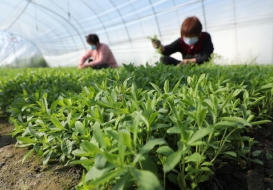
The United Nations recognises that our planet’s survival depends on how we maintain soil, urgently calling for more sustainable farming practices that improve soil health. Through Tate & Lyle’s sustainable agriculture programmes, we are supporting corn and stevia growers to introduce regenerative farming practices that benefit the farm and the farmer, resulting in healthier soil, improved biodiversity and watershed quality, and productivity gains.
On World Soil Day 2024, with its ‘measure, monitor, manage’ theme emphasising the importance of soil data-driven conservation efforts, Tate & Lyle highlights its new video showcasing our sustainable stevia programme in Eastern China with Earthwatch Europe and Nanjing Agricultural University. Developed as part of independent production company ITN’s ‘Future of Farming: Cultivating Resilience’ series, the video illustrates how regenerative agriculture practices that support soil health have far-reaching benefits for food security and help society meet the challenges posed by the climate crisis.
Why is strengthening soil health so important?
Soil health is critical to building diverse and resilient ecosystems. Healthy soil supports a more diverse range of microorganisms, plants and animals significantly contributing to increased biodiversity and broader environmental outcomes including decreasing and, under the right conditions, sequestering carbon.
Stevia is a plant-based alternative to sugar and is one of the most popular and fastest-growing low-calorie sweeteners globally. Through our sustainable stevia programme, one of two programmes developed by Tate & Lyle focused on regenerative agriculture, we have equipped farmers in Dongtai, Eastern China, with the know-how to grow a more climate resilient crop that can boost yields.
Our most recent programme results for the 2023 growing season, as featured in the video, show that farmers participating in Tate & Lyle’s sustainable stevia programme have been helped to achieve1:
-
a 76% decrease in terrestrial ecotoxicity, which measures the impact that farming inputs, such as fertiliser, have on land-dependent organisms and their environment.
Anna Pierce, Director of Sustainability at Tate & Lyle, explained: “The significant environmental gains achieved by our stevia farmer partners since we began this programme offer a clear example of how science-driven insight and partnerships can transform our food system in the fight against climate change. With land clearing and conventional farming responsible for around 20% of greenhouse gas2 emissions, soil management has a huge role to play. And, as our farmer partners attest to, healthier, better managed soil has been shown to bring direct benefits: higher yields, greater resilience from weather extremes, and a healthier environment for surrounding communities.”
Did you know?
If you would like to watch the full video with interviews from the Soil Association, Innovation for Agriculture, Regeneration International and Morrison's, visit the ITN Business hub here.
1 Per pound of stevia rebaudioside A produced, compared to a 2019 baseline
2 Source: United Nations