Reducing our water use | Tate & Lyle

Reducing our water use

Addressing water stress

Water quality and availability are crucial to the feeding a growing population. The UN World Water Development Report estimates global water demand is set to exceed supply by an estimated 40% by 2030. The world’s agricultural supply chains and food production systems face real challenges from the growing risk of water stress driven by climate change. 


Following the acquisition of CP Kelco in November 2024, we focused on integrating their sustainability programs including conducting a comprehensive review of water use and assessing the water and nature-related risks, opportunities and footprint of the combined business’s sites and key supply chains. Our assessment identified eight locations that with high risk of being impacted by water stress in the future.  Together these eight sites account for 76% of Tate & Lyle’s water usage. As a result, we updated our water target to prioritize investment and action in these locations to deliver the greatest impact while minimizing the potential impact of water-related risks.


Improving water stewardship

Tate & Lyle are building more sustainable operations through ambitious commitments and programs to improve water stewardship at our high water-risk sites, including:

  • Reduce water use intensity by 15% by 31 March 2034, measured against a baseline from the year ended 31 March 2024.
  • Pursue Alliance for Water Stewardship (AWS) certification to further reduce water-related risks and support basin-level collective action by 2034. 


2025 progress against our water reduction target

✓ 6% increase in water use intensity in our operations (target: 15% reduction in water use intensity by 2030). 1

1 Baseline of 31 December 2019.

Mason Mallonee headshot
Through our Sustainability by Design programme, launched in 2023, every capital expenditure is shaped by its environmental impact. Our sustainability engineers partner with project teams to identify new technology, processes or partnerships, that will reduce emissions, water or energy use – before a single decision is locked in.
Mason Mallonee
Sustainability Engineering Manager

Water stewardship in action

Van Buren Warehouse
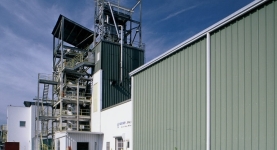
A new wastewater treatment plant at our speciality starch production facility in Van Buren, Arkansas, US, will come online in 2026. Through Tate & Lyle’s Sustainability by Design programme, which drives sustainability improvements across our network, our Global Operations engineers identified an opportunity to reuse cooling tower water reducing the need to draw on local around one third of Van Buren’s total water use via a new wastewater treatment plant freshwater supplies and lowering overall water use by one third.
Yume logo
Through our Sweetener Alliance with Manus, the production of our YumeTM M Stevia Sweetener starts in Peru using an approach designed to reduce water stress on local freshwater resources. The all-aqueous extraction process utilizes seawater processed through Manus’s desalination plant which removes salt and other minerals from seawater through reverse osmosis to produce fresh water for use in the production process. Focusing on responsible water management supports efficient production today while helping to protect water resources for the future.
TL-website-Zanea-08-2026
Supporting marine aquaculture - Zanea Seaweed Co. Ltd.
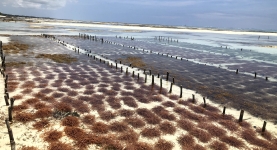
Marine aquaculture is an important part of our sustainability programme, as we rely on red seaweed to make carrageenan, a thickening, gelling and stabilising ingredient. Since 1990, our seaweed sourcing company, Zanea Seaweed Co. Ltd., based in Zanzibar, Tanzania, has worked with local communities – primarily women seaweed farmers – to cultivate and harvest this crop using sustainable farming methods. Zanea Seaweed Co. Ltd. achieved B Corp certification in 2024, reflecting its strong commitment to sustainable farming practices and supporting the local community
Claria logo
Tate & Lyle’s Science and Innovation team improved the manufacturing process of our CLARIA® Functional Clean-Label Starches to provide the same functionality as existing CLARIA® products with a significantly decreased environmental impact. The new products are produced with a 35% reduction in water use and a 34% decrease in greenhouse gas emissions. Combining our technical expertise and priority on sustainable production successfully decreased our environmental footprint and supports our customers to achieve their decarbonization goals.
Learn about our other sustainability commitments for 2030: